Sunday, March 27, 2011

ICC Cricket World Cup 2011: Gilani accepts Manmohan's invitation to watch semi-final
Pakistan Prime Minister Yousuf Raza Gilani has accepted an invitation from his Indian counterpart Manmohan Singh to watch the cricket World Cup semi-final match between India and Pakistan in Mohali March 30. Gilani will "informally" meet Manmohan Singh during the match and a formal meeting will be held after the match in which bilateral matters will be discussed, Geo News reported Sunday citing official sources. The sources said the two leaders will also hold discussions on "cricket diplomacy" to improve bilateral relations. Officials of Pakistan's sports ministry and the Pakistan Cricket Board (PCB) will also attend the match. Manmohan Singh Friday invited Pakistan President Asif Ali Zardari and Gilani to watch the semi-final match. The match will be held a day after home secretary-level talks between th

e two countries March 28-29.


Mohali opens doors to Pak fans Chandigarh welcomes visitors and Pak supporters from across the border for the India-Pak match Chandigarh residents have opened up their homes to welcome visitors from across India and abroad coming to Mohali for the India-Pak semi-final match today. The city's government has asked its residents to offer vacant rooms for 2 days to visitors who have come to witness the historic clash between the teams. So far, residents have responded well are being cooperative. They understand that hotel rooms are chockablock and visitors are pouring in every single minute. Plus, locals have also greeted Pakistani cricket fans at the Wagah border. Pakistani visitors have also shown their eagerness to mingle with their brethren across the border. For many, this is a unique opportunity to spread the message of peace. "The purpose of our visit is to show solidarity with both the South Asian teams that have made it so far in the World Cup. We bring with us a message of hope for a peaceful South Asia and pray that our friendly gesture furthers the noble cause of fostering a spirit of camaraderie ," says Saeeda Diep, a peace activist and the founder of Institute for Peace and Secular Studies , Lahore. AK Malhotra, head of Chandigarh’s hospitality wing, said that the government wanted to give a warm welcome to all guests and people have responded extremely positively. "Most of them do not want to charge any rent but we have left it (applicable rent) to the property owners," Malhotra said.

Playing with India

Indian Prime Minister Manmohan Singh has batted well to lob what Geo’s World Cup song has tunefully been exhorting as “aman ka chukka”. By inviting Pakistan’s prime minister and president to India to watch the semi-final between the two countries in Mohali on Wednesday, he has launched another spell of ‘cricket diplomacy’. But will it be more rewarding this time than its previous incarnations?

In any case, this essentially hopeful development has added to the frenzy that is building up for what will be the mother of all World Cup matches. We can be sure that the final, which one of our two countries is destined to play, will not match this excitement. The very thought of India and Pakistan battling it out for cricketing honours is electrifying.

As for cricket diplomacy, we may recall that it was initially the initiative of General Zia-ul-Haq, who went to Jaipur to watch an India-Pakistan cricket match in 1987. A couple of years later, of course, events in Kashmir totally spoiled the pitch on which the two countries were playing their diplomatic games.

And since relations between out two countries have been a roller-coaster, there was this spectacle in 2004 when Rahul Gandhi, possibly a future prime minister of India, and his sister Priyanka came to Karachi in March 2004 to watch a cricket match. During the same Indian tour, Lahore presented a show of love and friendship between cricket lovers of the two countries that is truly memorable.

Then, General Pervez Musharraf was in New Delhi in April 2005 to watch Pakistan rout India in a one-day played at the Feroze Shah Kotla ground. And his visit was marked by some unprecedented declarations of friendship. I was there at that time and it was a very festive occasion. Manmohan and Musharraf went so far as to talk about borders eventually becoming irrelevant. There were hints that the Kashmir puzzle was about to be solved.

You see, we have our memories of playing cricket and playing other games, mostly as spirited enemies. There were times when we were not even talking to each other. It is a history that would baffle the rest of the world, considering that ‘aman ki asha’ has forever been throbbing in the hearts of most of the people of both countries.

Talking of memories that are associated with cricket between India and Pakistan, I must refer to that extremely touching encounter with history that attended the visit of Dina Wadia, the only child of Mohammad Ali Jinnah, to Pakistan in March 2004. I was rather pleased with writing this first sentence of the column published in this newspaper on March 28: “Wearing her father’s features on her face, Dina Wadia came to Pakistan to watch cricket”.

This was her first visit to a country founded by her father, after she had attended his funeral in 1948. She watched the one-day final of the Indian tour in Lahore’s Qaddhafi Stadium, with her son Nusli Wadia. Her two grandsons had also come to see Pakistan. I remember that she did not speak to the media.

Naturally, she flew to Karachi to place a floral wreath on the imposing mausoleum of the Quaid and what she wrote in the visitors’ book is the only evidence of her emotional state of mind. She wrote: “This has been very sad and wonderful for me. May his dream for Pakistan come true”.

Can Manmohan Singh and the leaders of Pakistan move forward to bring us closer to the realisation of the Quaid’s dream? We should be encouraged by the fact that the stage for reconciliation between the belligerent neighbours has fairly been set by such initiatives as ‘Aman ki Asha’, launched by the Jang Group and the Times of India Group. This has been assisted by other civil society movements. A peace delegation from India is about to conclude its tour of Pakistan.

The point, simply, is that India-Pakistan relations are reaching a point where a meaningful breakthrough is very possible. Whether cricket diplomacy at this time can make any contribution to this process or not is something else. But I am tempted to make another diversion in this reference to how cricket is intertwined with the history of South Asia.

On Wednesday this week, we celebrated Pakistan Day. Every year, we do so in a ritualistic manner. But this year, the Day was celebrated by our cricket team when it demolished West Indies in the World Cup quarter-final. It became a gift of joy for the nation. How history may have cast its shadow on this victory is something that was not fully brought out.

Well, you know that on Pakistan Day we now invoke the Lahore Resolution of March 23, 1940. There was this allusion to “states” in the Resolution that was later amended. Be that as it may, we played the game on Pakistan Day in what was once East Pakistan. Moreover, the stadium in which the match took place in Mirpur is named after Shere Bangla – the venerable leader from East Bengal who had proposed the Lahore Resolution.

Coming to cricket itself, I do not have much to say because I have no expertise in the game. I can only applaud the potential that this game has to unite the country in an expression of national pride at a time when we are surrounded by difficulties. Talking of memories, I cannot forget the exhilaration of winning the World Cup in 1992. I happened to be the editor of the Karachi edition of this newspaper at that time and we had splashed the news across the front page with this banner headline: “We rule the world”.

Let us hope we can do that again. We know that sports events have the power to transform the national mood. So many countries in the world are addicted to football and the World Cup held recently in South Africa was a much bigger story than this Cricket World Cup. There are examples of how an international victory can have lasting effects on the politics of a country.

So, fasten your seat-belts and wait for Wednesday. We can be sure that the masses in both countries will watch the game with bated breath. Finally, only one team will go to the final. Let us pray that cricket diplomacy can somehow bring victory to both sides.


The writer is a staff member

Email: ghazi_salahuddin@hotmail. com


Tuesday, March 22, 2011


< " class="next" style="margin-top: 0px; margin-right: 0px; margin-bottom: 0px; margin-left: 0px; padding-top: 3px; padding-right: 4px; padding-bottom: 3px; padding-left: 4px; border-top-width: 1px; border-right-width: 1px; border-bottom-width: 1px; border-left-width: 1px; border-style: initial; border-color: initial; font-weight: inherit; font-style: inherit; font-size: 12px; font-family: inherit; vertical-align: baseline; background-image: initial; background-attachment: initial; background-origin: initial; background-clip: initial; background-color: rgb(101, 103, 88); border-top-style: solid; border-right-style: solid; border-bottom-style: solid; border-left-style: solid; border-top-color: rgb(170, 170, 170); border-right-color: rgb(170, 170, 170); border-bottom-color: rgb(170, 170, 170); border-left-color: rgb(170, 170, 170); cursor: pointer; background-position: initial initial; background-repeat: initial initial; ">

India, Pakistan heading closer to

Cup collision


Bitter rivals India and Pakistan are on a World Cup

collision course, but first the two neighbours have

quarter-final hurdles to overcome as the marathon

tournament enters its sixth week.

India take on defending champions Australia in Ahmedabad

on Thursday while Pakistan face an inconsistent West Indies

in Dhaka to kick-start the last eight stage on Wednesday.

Victory for both Asian giants will set-up a semi-final blockbuster

in Mohali on March 30.


"The people of Pakistan celebrate the 23rd of March, every year, with great zeal and enthusiasm, to commemorate the most outstanding achievement of the Muslims of South Asia who passed the historic Pakistan Resolution on this day at Lahore in 1940."

FROM March 22 to March 24, 1940, the All India Muslim League held its annual session at Minto Park, Lahore. This session proved to be historical.

On the first day of the session, Quaid-i-Azam Muhammad Ali Jinnah narrated the events of the last few months. In an extempore speech he presented his own solution of the Muslim problem. He said that the problem of India was not of an inter-communal nature, but manifestly an international one and must be treated as such.

To him the differences between Hindus and the Muslims were so great and so sharp that their union under one central government was full of serious risks. They belonged to two separate and distinct nations and therefore the only chance open was to allow them to have separate states.

In the words of Quaid-i-Azam: "Hindus and the Muslims belong to two different religions, philosophies, social customs and literature. They neither inter-marry nor inter-dine and, indeed, they belong to two different civilizations that are based mainly on conflicting ideas and conceptions. Their concepts on life and of life are different. It is quite clear that Hindus and Muslims derive their inspiration from different sources of history. They have different epics, different heroes and different episodes. Very often the hero of one is a foe of the other, and likewise, their victories and defeats overlap. To yoke together two such nations under a single state, one as a numerical minority and the other as a majority, must lead to growing discontent and final destruction of any fabric that may be so built up for the government of such a state".

He further said, "Mussalmans are a nation according to any definition of nation. We wish our people to develop to the fullest spiritual, cultural, economic, social and political life in a way that we think best and in consonance with our own ideals and according to the genius of our people".

On the basis of the above mentioned ideas of the Qaid, A. K. Fazl-ul-Haq, the then Chief Minister of Bengal, moved the historical resolution which has since come to be known as Lahore Resolution or Pakistan Resolution.


The Resolution declared: "No constitutional plan would be workable or acceptable to the Muslims unless geographical contiguous units are demarcated into regions which should be so constituted with such territorial readjustments as may be necessary. That the areas in which the Muslims are numerically in majority as in the North-Western and Eastern zones of India should be grouped to constitute independent states in which the constituent units shall be autonomous and sovereign".

It further reads, "That adequate, effective and mandatory safeguards shall be specifically provided in the constitution for minorities in the units and in the regions for the protection of their religious, cultural, economic, political, administrative and other rights of the minorities, with their consultation. Arrangements thus should be made for the security of Muslims where they were in a minority".

The Resolution repudiated the concept of United India and recommended the creation of an independent Muslim state consisting of Punjab, N. W. F. P., Sindh and Baluchistan in the northwest, and Bengal and Assam in the northeast.

The Resolution was seconded by Maulana Zafar Ali Khan from Punjab, Sardar Aurangzeb from the N. W. F. P., Sir Abdullah Haroon from Sindh, and Qazi Esa from Baluchistan, along with many others.

The Resolution was passed on March 24. It laid down only the principles, with the details left to be worked out at a future date. It was made a part of the All India Muslim League's constitution in 1941. It was on the basis of this resolution that in 1946 the Muslim League decided to go for one state for the Muslims, instead of two.

Having passed the Pakistan Resolution, the Muslims of India changed their ultimate goal. Instead of seeking alliance with the Hindu community, they set out on a path whose destination was a separate homeland for the Muslims of India--with a great name of Pakistan.

Perspective


The background of Pakistan Resolution is that in 1937, provincial autonomy was introduced in the Sub-continent under the Government of India Act, 1935. The elections of 1937 provided the Congress with a majority in six provinces, where Congress governments were formed. This led to the political, social, economic and cultural suppression of the Muslims in the Congress ruled provinces.


The Congress contemptuously rejected the Muslim League's offer of forming coalition ministries. The Muslims were subjected not only to physical attacks but injustice and discriminatory treatment as regards civil liberties, economic measures and employment and educational opportunities. The Congress Ministries introduced the Wardha scheme of education, the object of which was to de- Muslimise the Muslim youth and children.

According to British historian Reginald Coupland. "It was not only the Working Committee's control of the Congress Ministries that showed that a'Congress Raj' had been established. It was betrayed by the conduct and bearing of Congressmen. ..Many of them behaved as if they were a ruling caste, as if they owned the country ."

Mr. Ian Stephens, former editor of the newspaper' Statesman ' and an eyewitness to the working of the Congress Ministries, says: "The effect of this simultaneously on many Muslim minds was of a lightning flash. What had before been but guessed at now leapt forth in horridly clear outline. The Congress, a Hindi-dominated body, was bent on the eventual absorption; Westem-style majority rult?, in an undivided sub- continent, could only mean the smaller community being swallowed by the larger."

The animosity shown by the Hindus to the Muslim and their own experience of two-and-a-half year Congress rule strengthened the Muslims belief in their separate Nationality .The discriminatory attitude coupled with attempts by the Hindu dominated Congress to suppress the Muslims impelled the Muslims to finally demand a separate sovereign state for the Muslims.

However, the Muslim demand was violently opposed both by the British and the Hindus; and the Congress attitude towards the Muslims led to the hardening of the Muslims belief that only a separate homeland -Pakistan -can guarantee their freedom. This demand was put in black and white on 23rd March, 1940.

After adoption of the Pakistan Resolution, Quaid-e-Azam had a clear objective before him and he struggled hard to achieve it. In one of the meetings, he said: "We are a Nation of a hundred million and what is more, we are a Nation with our distinct culture and civilization, language and literature, art and architecture, legal laws and moral codes, customs and calendar, history and traditions, aptitudes and ambitions. In short, as Muslims we have our own distinctive outlook on life". He further said that by all cannons of international laws, we are a nation.

In 1945, Quaid-e-Azam proclaimed that only Muslim League represented the Muslims, and proved it to the hilt during 1946 polls, winning 100 per cent seats at the Centre, and 80 per cent in the provinces. Nothing could have been more conclusive to shatter the Congress claim of being a national body. If the British had read the writing on the wall in this verdict, Pakistan could have come into existence two years earlier without bloodshed.

With his charismatic personal Quaid-e-Azam turned the dream of a separate homeland into reality on 14th of August 1947. Ins of severe opposition, establishment of Pakistan, in such a short span of seven year surely an extra-ordinary achievement, which has no m in history.
On the eve of his departure Karachi from Delhi on August, 1947, Quaid-e-Azam a message to Hindustan, implored "The past must be buried and let us start afresh as two independent sovereign States of Hindustan and Pakistan. I wish Hindustan prosperity and peace."

Even in his post-partition statements, the Quaid-e-Azam envisaged a relationship of peaceful co-existence with India. But, the eruption of war in Kashmir in 1947 created acrimony between India and Pakistan, which became more acute with the passage of time. While Pakistan has throughout been supporting a peaceful resolution of the Kashmir dispute, the Indian obstinacy led to three wars and scores of clashes, peace initiative took him to Agra. Kashmir problem is resolved to bedeviling the relations between Even after the failure of Agra the satisfaction of the parties to both the neighbouring countries.

Pakistan's present leadership continues to subscribe to the policy of peaceful resolution of all disputes with India. Enumerating Pakistan' s foreign policy parameters on 23rd June, 2000, General Pervez Musharraf stated: The war should be avoided through a potent deterrence and diplomacy, engaging India on the issue of Kashmir for bringing permanent peace in the region without compromising on sovereignty.

President Pervez Musharraf's peace initiative took him to Agra. Even after the failure of Agra talks, he continued to persistently pursue his policy of peaceful resolution of all disputes with India. Reciprocating Pakistan President's gesture, the ex-Indian Prime Minister Atal Bihari Vajpayee, during his visit to Srinagar in April last year, extended his hand of friendship towards Pakistan. A meeting between the two leaders, on the sidelines of SAARC Summit in Islamabad early this year, led to a barrage of confidence-building measures and Secretary-level talks.

Now there is need to ensure a quick forward movement to resolve the long simmering Kashmir dispute, which has been the main irritant and the bone of contention between

India and Pakistan. All contentious issues between the two countries would be automatically settled if the Kashmir problem is resolved to the satisfaction of the parties to the dispute.

In short, the commemoration of 23rd March is an expression of the whole nation's resolute determination to preserve her independence and the Day's celebrations are a reflection of this.

Luxury lawn at Expo Centre

Published: March 21, 2011

SanaSafinaz Spring/Summer Luxury Lawn Collection 2011 completely sells out within hours of the first day.

KARACHI:

SanaSafinaz Spring/Summer Luxury Lawn Collection 2011 completely sold out within hours of

the first day, first show.


SanaSafinaz Spring/Summer Luxury Lawn Collection 2011

completely sold out within hours of the first day, first show.

The location was Karachi Expo Centre, Hall Number 6,

March 18. The vehicles that were moving towards

National Stadium were taking a U-turn and moving

away from the intersection and were taking the road

less travelled, next to the Civic Centre. It was a huge

day for SanaSafinaz with the brand’s Spring/Summer

Luxury Lawn Collection 2011 came out.
The collection comprised of 15 designs, having two

colour wayes each. The price tag started from Rs3,800

up to Rs 4,100. There were 15 cash counters catering to customers.
25,000 to 30,000 women attended the launch. The

number has been quoted on record by Sana Hashwani.

Almost all the stock sold out by 3 pm, except for some

lawn suits that were still available at 7 pm in the evening.

About this Sana Hashwani said: “There has been an

excellent response from the crowd. Almighty has been very kind on us.”
As far as choosing Expo as the venue is concerned, Hashwani said: “It’s a big place that can handle so many people!” But how wrong were they. The Expo Hall-6 could not hold the big crowd coming in and going out, the rush was unbelievable.
Spotted at the exhibition was designer Deepak Perwani, anxiously waiting to launch his own collection the next day. Stylist Rukaiya Adamjee said: “It is a phenomenal success. Really happy that their collection was utterly loved by everyone.”
In the evening hours, one young Jabeen Adnan was extremely disappointed, that she came to the exhibition but was turned back empty-handed, and regretfully stating: “They should have stocked more, when they knew people are just crazy about their designs!”
In the after-event press release, the brand said: “We want to thank and also apologize to all people who came on Saturday only to find it shut. All stock had finished in one day due to massive crowd."


Saturday, March 19, 2011


An aspiring young musician from Lahore Pakistan, Arooj Aftab is currently pursuing a Degree in Music Production and Engineering at Berklee College of Music in Boston, MA. Arooj hopes that her four years of intense music study will allow her to develop her passion and talent and grant her the hands-on experience she needs. Arooj is also very sensitive to Global Issues. She speaks openly for betterment of social issues in her country and around the world.

At Berklee, she is one of four individuals who have started the Berklee Peace Institute. Arooj envisions musicians working together as social activists, motivating people with music and instigating them to make strong, positive changes. With a line up of musicians from Greece, Turkey, India, Malaysia, Japan, Israel and many more, Aroojs' music is a refreshing and peaceful fusion of world instruments with contemporary classical pakistani vocal styles. She is keen on introducing her music to western audiences and hopes to explore even newer musical horizons.

Life and Career

Arooj Aftab was born in Saudi Arabia and spent few years of her childhood there. Her family then moved to Lahore, Pakistan where she completed her O level from Convent of Jesus and Mary and A level from Lahore Grammar School (DHA). She chose finance and accountancy as her career and was well on her way to becoming a professional accountant but deep down inside she had a strong passion for music. At the same time she was teaching herself to play the guitar and soon was writing her own songs, composing and mixing them on her computer at home.

She had known about Berklee College of Music since she was 14 years old through searching the internet for music schools out of curiosity for music education and professional degree in music. Before applying for college, she took a one year break and applied for a scholarship at Berklee online extension school (http://www.berkleemusic.com). That’s how she won Berklee College of Music's first Steve Vai online scholarship, one of five online scholarships awarded in 2004. She kept taking online classes for one year. Now 20 years old, she is living in Boston and pursuing an undergraduate degree in Professional Music based on Core Music Theory, Music Education and Music Production/Engineering.

Her primary goal, as she says, is to bring formal music education to Pakistan and along the way, she is planning to bring about some positive social changes for women in Pakistan and believes that music and musical motivation is an excellent medium to begin this change.

Her Music

“To me, music has never been about recording albums and making videos. It holds the incredible power to motivate people and influence their thoughts”

She has sung quite a number of both original songs and covers. Some of which are in rotation on local radio channels. The song that won her the Berklee Scholarship titled “walking” was written by her when she was in grade 9. It’s a mellow acoustic/alternative song. Her other popular works include a cover for Jeff Buckley’s “Hallelujah”, her originals “Celebration Of Life”, “Bolo Na” and many more.


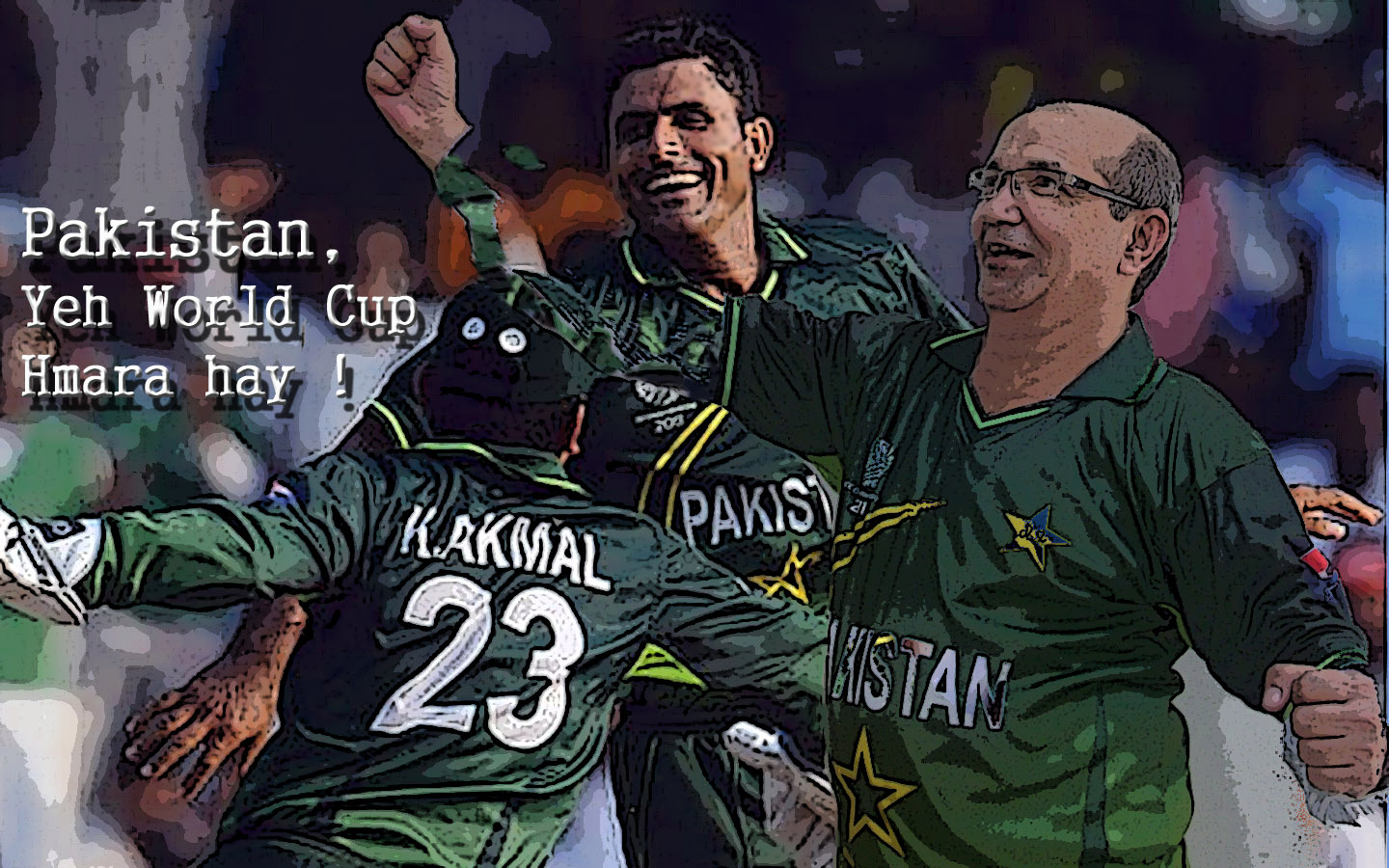
Cricket World Cup: Pakistan end Australia's winning march

Pakistan ended Australia's 34-match unbeaten run at World Cups with a tense four-wicket victory in Colombo to secure top spot in Group A.


Dominant Pakistan break

Australia’s unbeaten run

Lee celebrates one of 4 wickets. -Photo by AP


COLOMBO: Paceman Umar Gul claimed three victims as Pakistan beat Australia by four wickets on Saturday, ending the defending champions’ unbeaten 34-match World Cup run and capturing top spot in Group A.

Gul took 3-30 to help Pakistan dismiss Australia for 176 — their lowest World Cup total since 1992 — before Umar Akmal hit an unbeaten 44 to steer Pakistan to victory in 41 overs, finishing top of the pool with 10 points.

Pakistan, champions in 1992, will play the fourth placed team in Group B, while Australia (nine points) finished third behind Sri Lanka (nine points) on run-rate and will play the second placed team from Group B.

Saturday’s loss was Australia’s first in the World Cup since losing to Pakistan by 10 runs in Leeds in 1999.

But the champions, led by spearhead Brett Lee (4-28), fought hard and twice raised hopes of an unlikely win
.

Cable operators halt Geo, other channels’ transmission

Updated at 1505 PST Saturday, March 19, 2011
KARACHI: The Cable Operators Association (CAP) has halted airing transmission of all the private TV channels including ‘Geo News’ across the country for 24-hour from 12:00 pm Saturday in protest against the raids carried out by Pakistan Electronic Media Regulatory Authority (Pemra), Geo News reported.

According to the report, transmission of all the channels except State TV (PTV) has been stopped as per the announcement of Khalid Arain, chairman of the association.

After Davis

RAYMOND Davis has escaped his self-induced Pakistani nightmare, leaving behind his unhappy hosts to fight various sets of incongruous realities. In a democracy, a high-profile murder suspect has been allowed to get away without the rulers feeling the need or having the strength to share with the people their understanding of the compelling circumstances. As public perceptions go, these rulers are subservient to the wishes of the real powers that risk crudely breaking a few minor rules of their own. They are readying themselves to live up to the US prediction of even more friendly ties with `Pakistan` — at a growing distance from the Pakistan comprising shades of people with various wishes and grievances. The two Pakistanis are not easy to reconcile. The Davis episode has made reconciliation more difficult.

A sudden solution was found on Wednesday when a court especially set up inside the Kot Lakhpat jail accepted clemency affidavits signed by the heirs of the two victims of the mysterious CIA contractor. The governments in Punjab and Islamabad have subsequently explained they had no role in a release dictated by the law. However, a few days earlier, the heirs had alleged that the Punjab government was trying to seal an agreement between the accused and the aggrieved for the release of Mr Davis. The disappearance of the heirs now will be exploited by those who claim that not only were the heirs paid a huge sum, they were also intimidated into signing a deal. Some legal issues remain. The federal government on Wednesday could not explain how a man on the ECL was allowed to leave the country — even if he had legal documents proving he had been pardoned by the complainants in a criminal case.

These are not the only ironies. The Americans readily gave up their `diplomatic immunity` mantra to settle for the release of Mr Davis in accordance with the sameIslamic laws they have often criticised. Similarly, the religious parties are now in a position where faith-based justifications can no longer buttress their protests against the release which was procured under the Diyat laws. Meanwhile, protesters are vowing to free their country from the imperial yoke, but do not appear to be perturbed by the existence of a law that the rich can exploit at will. While no one is ruling out coercion in the sudden closure of the double case, it is not for the first time that a resourceful man has been accused of buying his clemency under the existing laws in a country dominated by all kinds of hypocrites and selective-rights protesters.


Davis’s departure: ISI-CIA’s dirty deal?

For decades, the people of Pakistan have suffered due to the CIA and ISI’s murky ties. These ties have led to the strengthening of Islamist forces, the natural allies of the GHQ in Pakistan


Raymond Davis, an American national accused of being a CIA contractor in Pakistan and charged with killing two Pakistani citizens in January 2011, was released by a Lahore court on March 16, 2011. The US authorities said Davis was protected by full diplomatic immunity but the Pakistani government refuted the US claim. He was immediately flown out of Pakistan after his release. Reportedly, Davis was released after paying Rs 200 million as ‘blood money’ to the legal heirs of the deceased.

Who actually ordered the release of Davis in Pakistan and on what grounds? What are the implications of the release for the people of Pakistan, especially in militancy-hit areas like FATA?

It should not be ambiguous that the release came into being due to successful negotiations between the CIA in the US and the ISI in Pakistan. The PPP government, which has long ago surrendered its authority over foreign relations (especially with the US) to the military establishment, has no role in the release. The same is true about the PML-N led government in Punjab where Davis was kept under detention. Without the establishment’s involvement, the Pakistani judiciary could not have ordered Davis’s release. Justice to the heirs of the men killed by Davis is irrelevant in the establishment’s paradigm of national security. There are reports that the heirs of two of the dead men have been forced to accept a compromise for Davis’s release. The brother of the third man, Ibad-ur-Rahman, killed by a US diplomatic vehicle that rushed to Davis’s help, has told the media that his family is not part of the compromise nor has it been taken into confidence by the authorities.

The CIA and ISI have had uneasy relations since the post-9/11 US attack on the Taliban and al Qaeda in Afghanistan. The US invaded Afghanistan without having addressed Pakistan’s concerns in Afghanistan vis-à-vis India. Lieutenant General Mahmoud Ahmed, the then ISI Chief, reminded the US of Pakistan’s long history with the Taliban. The then US Deputy Secretary of State, Richard Armitage, categorically told him: “History begins today.” Pakistan was forced into the US-led war on terror against the Pakistan-backed jihadi government in Afghanistan. Pakistan had no choice but to double deal with the US in the war on terror and this is what it has been doing to this day. To address immediate US concerns, some of the pro-Taliban military authorities like Lieutenant General Mahmoud were removed. But this does not mean that the army and the ISI were totally cleansed of the pro-Taliban people. General Safdar Hussain is a case in point. Through him, the Pakistan Army signed deals with al Qaeda-led militants in Waziristan and slaughtered traditional tribal leaders there. This jihadi general even had the audacity to publicly question the US presence in post-9/11 Afghanistan at the time of signing a deal with al Qaeda in Waziristan. Above all, the generals engineered an artificial insurgency in FATA. These generals have always been part and parcel of the ISI’s game to overpower the people of FATA through militants fully backed by military headquarters (GHQ) in Rawalpindi.

It is thus no wonder that the Americans have been constantly questioning Pakistan’s commitment in the war on terror. The CIA has had tense relations with the ISI all throughout the war on terror. “Did Raymond Davis, a CIA contractor, fall victim to this misunderstanding (between the CIA and ISI over the war on terror) and has he been released after the problem was sorted out?” asks Ayesha Siddiqa, a well-known Pakistani defence analyst, in a recent newspaper column. She also hints at the possible understanding whereby the CIA will withdraw its focus on Punjab-based jihadi organisations considered friendly by the Pakistani military, e.g. Lashkar-e-Tayyaba (LeT) and Jaish-e-Mohammad (JeM).

If true, this is very bad news for the Pakhtun on both sides of the Durand Line. The people of FATA complain that the Punjabi Taliban linked with these two organisations, and other Punjabi outfits, run the jihad show in FATA. They — who form an overwhelming majority of the militants — physically control the Pakhtun Taliban as well as foreign al Qaeda terrorists. The Americans should know that they have struck an anti-Pakhtun deal, if this is what they have agreed to in lieu of Davis’s release. For decades, the people of Pakistan have suffered due to the CIA and ISI’s murky ties. These ties have led to the strengthening of Islamist forces, the natural allies of the GHQ in Pakistan. The Davis release deal may be a contribution to these murky ties and may prove to be especially detrimental to the people of FATA, who have suffered only death and destruction since 9/11. Violence in Afghanistan, directed from terrorist centres in FATA, will not ebb as a result of the deal.

It is sickening to see Pakistani TV channels screaming at politicians over Davis’s release and failing to grill the sitting Pakistani generals who are the real force behind the release. The media has never had the courage to question the sitting generals over crimes against the Pakhtun and Baloch citizens of Pakistan. The only thing it is good at is humiliating anti-Taliban political parties and the democratic set up in Pakistan.

Pakistan’s Islamist political forces — long time allies of the military establishment — are boiling over with anger at Davis’s release. Their anger is directed at the spineless PPP-led political government. Ayesha Siddiqa rightly points out that the mighty “GHQ will ensure that this (anger) does not really boil over”. This will once again confirm that the GHQ controls the Islamist forces in mainland Pakistan, just as it commands the militants based in FATA. The GHQ may well just direct their anger to chase out the anti-Taliban PPP and ANP from power and accommodate the Islamists in any future political set up of Pakistan.

The writer is a PhD Research Fellow with the University of Oslo and currently writing a book, Taliban and Anti-Taliban

Thursday, March 17, 2011


Raymond Davis's release based on ISI-CIA secret deal: Report

A court in Lahore Wednesday acquitted Davis after payment of "blood money" as compensation to relatives of the victims. A US Air Force plane carrying 12 men, perhaps including Davis, later took off from Lahore airport for Afghanistan.

Family members of the slain men had appeared in court and pardoned the US national after an agreement was reached between the two sides.


Blood money, or "diyat" is a provision under Islamic Sharia law in which compensation can be paid to relatives of those killed to secure a pardon.

Davis, 36, shot dead two Pakistanis on a motorcycle in Lahore Jan 27, in what he described as an attempted armed robbery. He claimed he acted in self-defence.

He was a member of a security team assigned to protect CIA operatives in Lahore collecting intelligence on militant groups.

The release of American security contractor Raymond Davis, who killed two men in Lahore, is understood to have been based on a clandestine deal between Pakistani intelligence agency ISI and the CIA, a media report said on Thursday.

There were several protests across the country, and emotional outbursts by common people on television, accusing the federal and Punjab governments as well as the military and intelligence services of having bartered national interest and indulging in a secret sell-out, the Dawn reported on Thursday.

There was, however, no comment from the presidency, prime minister's office and the foreign office on the development.

The foreign office even cancelled its weekly media briefing usually held Thursday, fearing a backlash.

A statement by US ambassador Cameron Munter - dated March 10 - on Davis's release confirmed that the deal had been finalised almost a week ago, but its implementation got delayed because of issues pertaining to its execution.

It added that the US department of justice has opened an investigation into the incident in Lahore.

The daily said Davis's release "was preceded by a lot of give and take between the two countries, particularly their security agencies".

"Therefore, it was understood that resolution of the Davis saga hinged on a deal between ISI and CIA as to how the two inter-dependent spy agencies agreed to carry forward their relationship," it said.

His release came only a day after it was reported that the ISI and the CIA were nearing a settlement and that they had resolved their differences.

The negotiations began at a secluded luxury beach resort in Oman last month between Pakistan Army Chief Ashfaq Parvez Kayani and the American military top brass.

The deal, which had US President Barack Obama's nod, could mark a serious change in the ISI-CIA collaboration parameters, the daily said.