Wednesday, March 7, 2012


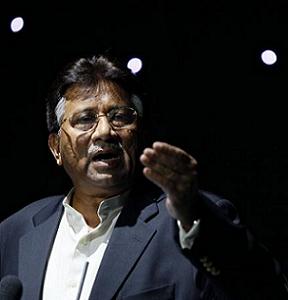
Pervez Musharraf Favors To Accept Israeli State


Former President of Pakistan General (r) Pervez Musharraf said that Israel is a reality and Pakistan has to accept it, he said this during interview to Israeli newspaper Haaretz. He said that good relation with Israel could also help Pakistan. He also expressed that if Pakistan accept Israel then it will be helpful for Indo-Pak Friendship.

Former President also accepted during interview that Israel is also an ideological country same like Pakistan. He also demanded that Pakistan should redesign its foreign policy and start relation with Israel.
Commenting on Palestinian State, Musharraf clarify that Pakistan would continue to support for Free and Independent Palestine. Answering to a question, Musharraf also elucidated that Pakistani Nation is not anti-Jews but they are anti-Israel due to Palestine conflict.

Top US general coming to Pakistan

 The top US commander in the Middle East said on Tuesday he will travel to Pakistan in about 10 days to talk with leaders about reopening ground supply routes that have been closed since late November, reported Washington Post, quoting an American news agency.

Pakistan shut down the supply routes in an uproar over US airstrikes that killed 24 Pakistani soldiers in an exchange of fire at the Afghanistan border on Nov 26.
US officials have worked to try and repair the tattered relations with Islamabad.
Pakistan has rebuffed any US military visits since the airstrikes, and Islamabad’s parliament is working out new guidelines to define the US-Pakistan alliance.
It has been more than three months now since Pakistan suspended NATO supply routes into Afghanistan owing to fraught relations between Pakistan and the United States. Relations between both the countries fell to the lowest ebbs after NATO gunship helicopters attacked a Pakistan military checkpoint in Mohmand Agency, killing 24 Pakistani soldiers. A number of subsequent reports into the incident suggested the attack was unprovoked and unwarranted for.
Trust deficit between both the countries touched new heights after the incident and Pakistan felt the United States was pushing the country to the wall. Civilian and military leadership of Pakistan then took the unanimous decision of blocking two NATO supply routes. The supply routes to NATO troops stationed in Afghanistan was shut down and still remain suspended. A number of other bold steps were also initiated against the US.
General James Mattis – the United States Central Command Commander – has said that he will be visiting Pakistan in the next couple of days to have dialogue with Pakistan's civilian and military leadership for reopening the supply routes. The development is heartening, as the official visit of General James Mattis would be the first one of any high profile US official after the November 26, 2011, Salala check post attack.
The general, while speaking to the US Senate Armed Services Academy, said that the ground lines were of great importance to both the countries. The general appeared optimistic for resolving issues with Pakistan. However, it is yet to be seen how he is welcomed in Pakistan.
Earlier, Pakistani civilian and military leadership refused to meet Special Envoy to Afghanistan and Pakistan Marc Grossman, saying he was not the right man to meet with during escalating pressure between both the countries.
The US has been facing a lot of difficulties since the supply routes to troops in Afghanistan were blocked three months ago. Pakistan also boycotted the Bonn Conference held in Germany to discuss different ways to bring peace in Afghanistan after the US withdraws its troops from the country at the end of 2014. Both the countries cannot afford strained relations for a long time because both of them depend on each other for a number of things.
Although Pakistan blocked NATO supply routes, the country has kept its skies open for the supply to US-led coalition forces in Afghanistan. For the first time, the US ambassador to Pakistan, Cameron Munter, revealed yesterday that Pakistan's airspace was being used for the supply. Later, Pakistan Defence Minister Ahmad Mukhtarconfirmed the statement by the US ambassador, saying the airspace was allowed for perishable items. Let’s hope, General James Mattis will be successful in getting a favorable response not only from the military leadership but also from the civilian government.

Tuesday, March 6, 2012


Russian leader Vladimir Putin has accepted Prime Minister Yousaf Raza Gilani’s invitation to visit Pakistan in September.
Gilani telephoned Putin on Tuesday to congratulate him on his election as the country’s president.
According to a press release, Gilani told Putin that the fact that people brought him back to office is testimony of them reposing their confidence in his leadership. The prime minister also extended him an invitation to visit Pakistan in September, which was accepted by Putin. The two foreign ministries will decide on the exact date of the visit.
Putin appreciated Gilani and his government’s efforts for consolidating relations between Russia and Pakistan.
Putin, who is currently the prime minister of Russia, was recently elected as the president amid fierce protests and criticism over his control of Russian politics.

Pakistan warns against aggression on Iran

Any aggression against Iran over its nuclear programme will have “disastrous consequences” for the whole region, Pakistan’s Foreign Minister Hina Rabbani Khar has warned.
Pakistan will not support any military intervention in the region, Khar said.
“This region cannot afford further aggressions,” she told journalists during an interaction at Multan in Punjab province yesterday. Khar reiterated that Pakistan would go ahead with a gas pipeline project with Iran despite pressure from the US to abandon the venture.
She said the project offered a quick solution to Pakistan’s burgeoning energy crisis. At the same time, Islamabad will also pursue the Turkmenistan-Pakistan-Afghanistan-India pipeline project, she said.
Khar’s remarks came in the wake of President Barack Obama’s comments that the US will use force against Iran, if necessary, to stop it from acquiring a nuclear bomb.
Several American leaders, including Secretary of State Hillary Clinton, have called on Pakistan not to go ahead with the pipeline project with Iran as it could be hit by sanctions.
Referring to relations with India, Khar said Pakistan is committed to resolving all outstanding issues, including Kashmir. ”No issue has been put on the backburner,” she said.
Khar said her recent visit to Afghanistan helped remove many misunderstandings. President Hamid Karzai has been assured that Pakistan will help the Afghan government in “reaching out to the Taliban” for peace talks, she said.
She rejected allegations that Pakistan was linked to the instability in Afghanistan. ”They (NATO) must realise that we cannot afford to destabilise our own country… It’s not in Pakistan’s interest to create problems for the foreign forces fighting terrorism in Afghanistan,” she said.
A decision on reopening NATO supply routes, closed since a cross-border air strike killed 24 Pakistani soldiers last year, will be made by Parliament, she said.

Saturday, March 3, 2012


Woh humsafar tha...

Last episode tonight.
Published: March 3, 2012
Pakistan’s popular drama comes to a close. PHOTO: FILE
KARACHI: 
A typical TV serial generates hype when it keeps viewers guessing, creating nail-biting suspense that lasts right till the last episode. By that standard, the phenomenon that is “Humsafar” is anything but typical  —tonight hundreds and thousands of eager fans will have their eyes glued to their TV screens at exactly 8 pm even though they know precisely how this modern-day tragedy will play out.
So what makes “Humsafar” special? We know it isn’t unpredictable – adaptations aren’t, since everybody knows the story anyway! It isn’t exactly groundbreaking either, since marriage, separation, intrigue and honour play a part in most Pakistani dramas.

As the series draws to a close, viewers may be assured of Ashar and Khirad’s future happiness, but long to have this lingering question answered for them: what will happen to Fareeda? This is where “Humsafar” may yet have a surprise in store for us, and we just can’t wait.


Humsafar is perhaps one of very dramas that have captivated the Pakistani drama fans. Back in the day, most people had no choice but to watch PTV dramas and there were no re-runs, so viewership was extremely high. What sets Humsafar apart from other current dramas is that despite people having several choices including a multitude of channels, several re-run opportunities, and endless episodes on You Tube; people desperately wait for 8 pm Saturday as soon as the current episode ends. And these people want to see it as soon as it is available. I have been to a few social gatherings and noticed the ladies scattered around the TV watching Humsafar like a group of bees around a honeycomb. Hats off to the entire team for rejuvenating Pakistani passion for Urdu dramas.


Humsafar was written about in Toronto Star! And then a week or two later, Sharmeen Obaid-Chinoy wins the Oscar! It is heartening to see Pakistan’s talent being given recognition all around the world. A nice break from all the negative stories of Pakistan, it is time to showcase the positive side of Pakistan.


Finally it is about high time, I can say good bye to Humsafar, I have been waiting for this finale for some time now. I think social media played a big role in the promotion and growth of this drama, making it a world wide phenomena among South Asians all over the world. Even one of my blog’s is dedicated to Humsafar. Lol


At this time QB should also be praised for singing this eternal theme song in her captivating and unique voice. The whole cast and crew should be appreciated for upholding its avid followers till the end. Hope to see more dramas of such kind soon.


humsafar is nothing but a sad vehicle for further perpetuating patriarchy.The themes dominant in the drama are the ones highlighting the dominance and importance of man over woman.the stereotypes promoted of all the women fighting over a man,the man being the prize while the lowly women fight to get hold of the prize.the high ratings it got only proves how backward and regressive our female population still is,it still falls for patriarchy presented as a love story.mahira’s character is especially loathsome,the non-stop tear shedding,the desperate pleas,the self humiliating attempts to prove how loyal a wife she is.All this sorry excuse for a drama did was further imbed in the minds of women all over pakistan how incomplete their lives really are without a man.

Hamsafar is one of the best plays ever produced i would like to congratulate the team of Hum TV and the cast of Hamsafar .Great story very well made and brilliant performance .I am sure if Pakistan can produce quality plays like Humsafar they can produce movies of better quality and substance .Well done Hum Tv keep it up .I see a bright future for Pakistani plays and movies.


What sort of girls would watch misogynistic propaganda like this? how much do you dislike your gender if you admire someone like the guy in the middle of the photo? only girls with low self esteem would find such a male character admirable.


I think one reason for Humsafar hit was that there is vacuum of a “Pakistani romantic hero” which can not be filled with foreign heros.


After an brilliant performance Humsafar team & HUM TV should think of turning HUMSUFAR in to an Movie i am sure it will be a hit !
Looking forward to the last episode Well Done once again .

Humsafar is the best thing on TV in a long time

These things are happening now a days. If media don’t highlight such issues, you guys say media is not playing its role. Now they are showing this thing, you have problem.. The fact is our society, culture, environment is changing and we have to raise things…


Friday, March 2, 2012

Pakistan's first Oscar-winner should be celebrated for exposing the 'bad bits'Sharmeen
Obaid-Chinoy's Saving Face highlights acid attacks on women, but Pakistani critics want a more positive picture

guardian.co.uk, Thursday 1 March 2012 17.05 GMT Article history

Surgeon Mohammed Jawad reconstructs the faces of women disfigured by acid attacks in Sharmeen Obaid-Chinoy's film Saving Face

Filmmaker Sharmeen Obaid-Chinoy has made the headlines by bringing home Pakistan's first-ever Oscar for her documentary short – Saving Face. The film exposes the horrifying brutal acid attacks on women, and the amazing work of the British Pakistani plastic surgeon Mohammed Jawad, who travelled back to his countryof birth to rebuild the victims' disfigured faces. Obaid-Chinoy dedicated the Oscar to "all the heroes working on the ground in Pakistan" and to "all the women in Pakistan who are working for change".

Unsurprisingly, Facebook and Twitter feeds were soon clogged with overjoyed, patriotically proud Pakistanis, reposting the clip of her Oscar speech, with some suggesting it was an even greater occasion than when Imran Khan raised the cricket World Cup back in 1992.

The Express Tribune, Pakistan's liberal English-language newspaper, hailed Obaid-Chinoy as a role model, the "face of a more liberal and tolerant Pakistan". Dawn newspaper wrote of the "welcome change" of seeing Pakistan talked about in a positive context internationally, while the Urdu paper Nawa-e-Waqt even produced a special supplement to honour her win. "The whole of Pakistan prayed for her," it said. "Her victory made every Pakistani happy." The government, meanwhile, will present the 33-year-old with a civilian award.

But not everyone is so overjoyed. Alongside the praise are mumbling criticisms from commentators who feel Obaid-Chinoy has brought shame on the country. They complain she is merely reinforcing the west's negative view of Pakistan. As a Pakistani herself, the dissenters argue, she shouldn't be promoting it in a bad light.
So far she's been called a "liberal fascist" and a "traitor", who is "defaming" Pakistan and "belittling the country" through her choice of subject matter. There are comments like this under newspaper articles: "She has made a career out of trashing Pakistan. I don't know why so many people are starting to like her, she has done nothing to improve the image of Pakistan," and blogs asking: "Was there no positive story available in Pakistan for Hollywood to enjoy?"

Sadly, this exasperating attitude is not just focused on Obaid-Chinoy, but is also reflective of a lazy, myopic attitude that a minority of Pakistanis share, the kind that would rather turn a blind eye to its society's problems than acknowledge serious violation of women's rights and tackle them. When I visited a women's shelter in Lahore a few years ago, for instance, to interview women who had fled domestic abuse and forced marriage, I was implored to "write about the good bits, not the bad". I can't deny the work of the women's shelter was indeed fantastic, but ignoring the violence that led these women to seek shelter is irresponsible.

Obaid-Chinoy is no "traitor"; she has honestly opened her eyes to the problems of her home country. It is possible to be patriotic to a nation, and yet critical of it at the same time. As writer Mohsin Hamid tweeted: "Upset Pak[istan] has won its first Oscar for a film 'critical' of the country? Your attitude might explain why it's taken so long."

In the New York Times, a Pakistani journalist wrote: "What does it say about a country that it would rejoice at attracting global attention for rampant violations of women's rights? Obaid-Chinoy's film highlights these problems – hardly a point of pride for Pakistanis."

But if Pakistanis are proud, it's because Obaid-Chinoy has created history and in doing so, she's given her country hope at many levels. There's hope for young Pakistani girls that they have options to follow a career, no matter how unconventional. There's hope for Pakistan's incredible artistic, cultural talent, that it might one day be taken seriously.

But most importantly, there's hope for women like Zakia and Rukhsana, the women who feature in the film and whose husbands threw acid on them. There's hope they don't have to live in shame because of what has been done to them. There's hope they will find justice, that the men that do this won't go unpunished. There's hope that more people like Jawad will come forward, and show victims of this brutality that there is a chance to live again.

And there is hope that after the Oscar euphoria dies down, Pakistan will search its soul and look for ways to better its society for women. After winning her Oscar, Obaid-Chinoy launched an anti-acid attack campaign. Her mother explained that it was to make "our society more humane". That effort alone is something to be proud of.

What She Wore: Oscars Spotlight Pakistan’s Designers


Associated Press
Sharmeen Obaid-Chinoy, right, in a dress by Sana Safinaz at the Vanity Fair Oscar party on Sunday, Feb. 26.
When “Saving Face” was nominated for the 2012 Academy Awards, Pakistani filmmaker Sharmeen Obaid-Chinoy swore she would choose clothes by Pakistan’s designers for the ceremony. “Our fashion industry features an array of talented and creative designers,” she said. “I am really excited to showcase some of that at the Oscars.”
Holding her Oscar high on Sunday, Ms. Obaid-Chinoy became Pakistan’s first Academy Award winner. She also made good on her promise, wearing creations by a range of Karachi-based women designers to events both on and off the red carpet. (Karachi is the city where she lives and works.)
On stage, the filmmaker wore an elegant Bunto Kazmi-designed shalwar kameez – a traditional outfit of loose-fitting trousers and a long tunic worn in South and Central Asia.

Kiran Aman
Ms. Obaid-Chinoy wore this vintage-gold cuff, by Karachi-based designer Kiran Aman, when accepting the Oscar for ‘Saving Face.’
According to Ms. Kazmi, who is known for her elaborate bridal wear, the filmmaker wanted the outfit’s silhouette to be kept “contemporary.” In contrast, the glittering embroidery on the long ivory tunic coat, with cut-in sleeves and a structured collar, was inspired by traditional Persian motifs, while the border incorporated beaten silver and gold.
Gold also featured in Ms. Obaid-Chinoy’s accessories, created by jewelry designer Kiran Aman. The filmmaker’s dangling diamond-and-pearl earrings were set in vintage gold, the same material used for a bespoke cuff, which she wore on her right wrist. The piece was attached by a delicate gold rope to a round Pakistani flag encrusted with white diamonds and green sapphires.
Ms. Aman said she was “honored” to have the filmmaker wear her creations at the Oscars, adding that she had advised her to “hold the Oscar with the right hand” so that the flag would dangle.

C.A.M.P.A.S.
Ms. Obaid-Chinoy, right, in a design by Sania Maskatiya at a pre-Oscar event for nominees.
At the Vanity Fair Oscar Party, held after the event, Ms. Obaid-Chinoy wore more bespoke jewelry: a cuff and ring by designer-cum-architect Sherezad Rahimtoola. “I am very grateful to Sherezad and Kiran for making me such beautiful jewellery just for the occasion,” she said, adding that her Sara Taseer earrings were from her personal collection.
The accessories set off her long, flowing silver- and gold-work kurta by the label Sana Safinaz, spearheaded by designer duo Sana Hashwani and Safinaz Muneer, who have been active in the Pakistan fashion scene for over two decades.
At a pre-Oscar luncheon at the Beverly Hilton Hotel in L.A., Ms. Obaid-Chinoy showed up in an outfit by a less established name: up-and-coming designer Sania Maskatiya, whose label is a year old. Her hand-embroidered silk shalwar kameez featured a tree of life – signifying growth and success – adorned with multicolored birds and butterflies.
A relative newcomer to Pakistan’s fashion scene, Ms. Maskatiya transforms “the conventional to [the] contemporary” with her designs, which are stocked in Karachi, Dubai and Singapore. She said she was glad that fashion at the Oscars helped to project the country “in a softer light.”
Think twice on gas pipeline with Iran, US to Pakistan

Washington: The United States has asked Pakistan to "think twice" on its plans to go ahead with construction of a gas pipeline from Iran, cautioning Islamabad that Tehran is an "unreliable" partner.

The American statement came a day after the Pakistani Foreign Minister Hina Rabbani Khar refused to tow the US line on the Iran-Pakistan gas pipeline and said that Islamabad would go ahead with the project.

In fact, the two countries appear to be headed towards confrontation on this contentious issue. On Wednesday, the US Secretary of State, Hillary Clinton, said there would be "dangerous implications" for Pakistan if it went ahead with the gas pipeline project, which in Islamabad was seen as nothing but a strong warning coming from the Obama Administration.
"I don't think what the Secretary said was appreciably different than what we've been saying for weeks and weeks publicly, privately, if not months on this subject. You know, this is something that we don't think is a good idea. And the Secretary made that absolutely clear," Nuland told reporters when asked about the exchange of statements between the leaders of the two countries yesterday.

"We would also note that, you know, Iran is making all kinds of offers to all kinds of countries, and they often don't live up to their promises.

"And we know that Pakistan has energy needs, and we are working with Pakistan on those energy needs. And we would just encourage them to think twice about aligning themselves with an unreliable partner," Nuland said.


Echoing Clinton, the US official said that given the international sanctions against Iran, Pakistan would face the burnt of it, if it decided to go ahead with the Iran-Pakistan gas pipeline project.

"You know that we have a variety of sanctions on the books that we would not want to see kick in, in this instance, which is, you know, among the reasons why we think this is a bad idea and hope it doesn't go forward," Nuland said in response to a question.

Pakistan snubs US warning on Iran pipeline

Published: March 2, 2012
Gas pipeline in Pakistan's interest, ample win-win opportunities among Pakistan, Iran and Afghanistan. PHOTO: AFP
ISLAMABAD/MULTAN:  Pakistan reasserted its firm resolve and commitment to cooperation with Iran, particularly in the energy sector, as the US renewed its opposition for the multibillion dollar Iran-Pakistan (I-P) gas pipeline project yet again — this time more subtly through its consulate general in Lahore.
“We are a sovereign country and we will do whatever is in the interest of Pakistan,” Prime Minister Yousaf Raza Gilani said while responding to a question on “Prime Minister Online,” a programme hosted by Pakistan Television and Waqt News.
The prime minister said that while Pakistan wants to expand ties with the US on the basis of mutual interest and respect, the US should refrain from interfering in Pakistan’s internal affairs.
Earlier, a more direct Foreign Minister Hina Rabbani Khar said projects with Iran were in the national interest of Pakistan and will be completed irrespective of any external pressures.
“All of these projects are in Pakistan’s national interest and will be pursued and completed irrespective of any extraneous considerations,” the foreign minister said at a press conference at the Foreign Office.
“As far as our bilateral relations and co-operation is concerned, we do not make it contingent on views and policies of any third country.
“We cannot afford to be selective. [However], we want to add the element of credibility with the US,” said Khar.
Her reaction came just a day after US Secretary of State Hillary Clinton told a congressional subcommittee that Pakistan risked facing economic sanctions if it continued its plans for the pipeline.
Clinton said that embarking on the construction of an I-P pipeline is in violation of the Iran Sanctions Act. However, Khar rejected the assertion, saying: “All friends of Pakistan must understand our energy needs”.
She did not, however, explain how Pakistan would respond if the US did penalise Islamabad in case it went ahead with the project.
“We’ll cross the bridge when it comes,” Khar said.
‘Focus on domestic sources’
Earlier in the day, while addressing industrialists and the business community in Multan Chamber of Commerce, Nina Maria, the US consulate general in Lahore said: “Pakistan should better find solutions domestically for their energy crisis than going for the Iran-Pakistan gas pipeline.”
Emphasising on alternative sources of energy, Maria said that the US government has donated $15 million for thermal power stations which will be constructed in Muzaffargarh. The project would generate about 1,400 megawatts of electricity and will be completed in November 2012.
The US consulate general was of the view that the pipeline was three years away from being completed and it wasn’t something that Pakistan had to move on immediately.
“You have other domestic programmes which can be easily upgraded. You can work on them with co-ordination from us before considering the I-P gas pipeline to alleviate the country’s energy woes.
“Ultimately Pakistan will have to solve its own problems and find its own answers,” said Maria.
Discussing Pakistan’s relations with its neighbours, she said: “Pakistan needs to decide its policy and its relations with its neighbouring countries and whether it wants them to be friends or foes. We are ready to give assistance.
“The US and Pakistan’s civil-military leaderships are in constant contact with each other on the policy matters.”
Normalising trade with India
Meanwhile, the foreign minister said that Cabinet’s decision to liberalise trade with India would be “mutually beneficial” for both the countries.
However, in an attempt to pacify certain groups and rightwing parties on the issue of granting most favoured nation (MFN) status to India, Khar insisted that the decision must not be construed as “dilution” of Pakistan’s principled stance on the longstanding issue of Kashmir.
She argued that normalising trade and economic relations with India would hopefully pave way for conditions leading to the resolution of all contentious disputes between the two countries.
“India is exceptionally keen for result-oriented talks with Pakistan,” she stated.
Meanwhile, regarding the Afghan reconciliation process, Khar maintained that Pakistan would support an Afghan-led, Afghan-owned and Afghan-driven reconciliation process.
She said Islamabad has no desire to interfere in the internal matters of Afghanistan. “All countries must adhere to this principle.”

Published in The Express Tribune, March 2nd, 2012.
Thursday, March 1, 2012

What the Oscar means for Pakistan and Iran

February 29, 2012
For some it may just be the recognition for their talent, but for a few the Oscars transcends beyond a personal gain and is a matter of national pride. PHOTO: REUTERS
When the name Asghar Farhadi was called out as the winner of the prestigious award in the category for Best Foreign Language Film, for his film ‘A separation’, I immediately texted my best friend, who happens to be Iranian, congratulating her, while doing a little dance of happiness for a fellow Muslim country’s achievement. Many of my Muslim friends also updated their statuses, even though they were not Iranians.

However, when Sharmeen Obaid-Chinoy’s name was called for Pakistan, in the category Best Documentary, Short Subject for her film “Saving Face”, my entire Facebook feed flooded with updates from Pakistanis across the globe, who were cheering with joy. I can only imagine how many other Iranians or Pakistanis across the globe relished in these victories – my heart was definitely jumping with joy on both counts.

To many, the Oscar represents an elite award, much anticipated as a night to see many of your favourite stars dressed in the fanciest of garbs. It is the highest level of excellence achieved by professionals in the film industry, including directors, actors, and writers. Year after year, we see big names getting nominated and winning for their performances, but the categories for foreign film, documentary, debut film, and short film come as an opening door for many aspiring artists.
For some it may just be the recognition of their talent, but for a few the Oscars transcend beyond a personal gain and are a matter of national pride. For nations like Iran and Pakistan, this opportunity has meant a new beginning, a reason to hold up your head high amidst very bleak political turmoil.
Pakistan and Iran have shared a long history of friendship, but also similar fates in their share of media negative limelight in the recent past. Ironically enough, both countries also shared a moment of great pride at Oscar night.
Pakistan is dealing with issues on many fronts, from issues of national security, terrorism, the energy crisis and to the very suspicious discovery of Osama bin Laden in Pakistan’s very backyard. Needless to say, Pakistan does not have the honour of having the best reputation on the global front. Sharmeen’s win comes as not just a matter of national pride, but also as much needed relief for Pakistanis who are having difficulty feeling proud of their country.
The film documents the journey of a British plastic surgeon who tries to repair the horrific damage done to women’s faces with acid by vindictive or jealous husbands. Although the subject matter of the documentary brings to the forefront a deep, dark and harrowing part of the fabric of Pakistani society and showcases the ugly face of the patriarchy that damages the lives of many Pakistani women, Sharmeen’s film also focuses on the courageous lawyers and legislators who introduced a strict law last year that mandates a life sentence of life for those convicted. In this way, the Oscar is a symbolic win for all those working to eliminate this heinous act.

Sharmeen hopes her Oscar will inspire other Pakistani film-makers.
“This shows that someone from their ranks can do it” she said
The story of the documentary itself symbolises the perseverant nature of Pakistanis and the very history of Pakistan and provides hopes to desperate Pakistanis all around the world that we will survive even with the odds piling up against us.
Similarly, when Iran’s Farhadi came up to receive the Oscar, every Iranian probably screamed with joy because Iran’s name was finally in the media for something other than oil sanctions or its nuclear program. Farhadi capitalised the opportunity in his speech and said what every Iranian wanted him to say:
At this time, many Iranians all over the world are watching us and I imagine them to be very happy. At the time when talk of war, intimidation, and aggression is exchanged between politicians, the name of their country, Iran, is spoken here through her glorious culture, a rich and ancient culture that has been hidden under the heavy dust of politics.
It gave a much needed breath of fresh air to the people of Iran and sent a message to the global community that Iran, too, is a talented country that has a lot to offer.
Farhadi’s win couldn’t have come at a better time; Iranian cinema is facing a brutal crack down by its government. The House of Cinema, an independent guild that supports filmmakers, was shut down in early January by the government, who claim that the guild does not have the correct paperwork to operate. However, the reality is that some conservative media outlets had bashed the guild and claimed it was a front for foreign plots. Farhadi’s win will hopefully thwart these unnecessary attempts to silence the brilliant voices of Iran and send a message of hope to those aspiring film-makers to continue doing their work.
Both Farhadi’s and Sharmeen’s wins bring hope to the many talented and aspiring filmmakers, artists, activists, writers and many others to dream the big dream, and to not let the tainted image of their countries be a deterrent to achieving their dreams. Their victory sends the message that by doing the work that you love, you too could rise to the top echelons and contribute towards dispelling negative stereotypes . All Iranians and Pakistanis should be proud of their heritage and continue to celebrate the works of such great talent and not lose hope against adversity, because good work seldom goes unnoticed.
Here is a hearty congratulation to both these film-makers and the people of the Republic of Iran and Pakistan. I hope both these countries will rise against the negativity and prosper as great nations.
This post originally appeared here.
The views expressed by the writer and the reader comments do not necessarily reflect the views and policies of The Express Tribune.