Wednesday, August 1, 2012

Why porn is popular in Pakistan

If not controlled, pornography will cause the country to spiral out of control and lead a whole generation astray.

It’s late at night and the hands of the clock signal that it is just past midnight. The whole family is sound asleep with the sole exception of a young man sitting on the bed, with the laptop right in front of him. To anyone, including his family, it seems as if he’s studying, or working on an important project, or checking out the latest headlines online or watching innocent, comical clips on YouTube. All it takes is a peek over the shoulder and all is not what it seems.

This scenario is part of an average, everyday lifestyle for thousands of young adults right across the country, where in the late hours, viewing explicit material is more important than getting eight hours of sleep.

Known commonly as pornography, it is the latest epidemic in the world of technology and computers of the 21st century. Understood to be one of the causes that destabilises a solid and strong society, it ‘is the explicit portrayal of sexual subject matter for the purposes of sexual arousal and erotic satisfaction’.

Varying in different types of media, pornography is produced in the forms of books, magazines, postcards, photos, sculptures, drawings, paintings, animations, sound recordings, films, videos and video games. An era once existed when magazines publishing vulgar images were very common. However, these print materials have dried away and are now replaced by DVDs and CDs, supplied openly in major cities such as Karachi.

One person recounted how a shopkeeper in a DVD shop in Karachi grabbed a handful of porn DVDs and suggested them when the person mentioned an interest in romantic Bollywood films. Frowning upon the vulgar material, the customer left the shop, disgusted with the way these things were being sold so openly as if it was nothing to be ashamed.

Pakistani adults are growing frustrated and feel that they are being abandoned by their government under the current circumstances. Youths who lack employment or education opportunities are more likely to experience the frustration and become entrapped in this mess. Because they are unable to find someone to confide in, young adults find solace in these communication networks, and thus the problem of pornography continues to plague us all.
Parents blame the internet, but there is no point in doing that. If someone took a fatal bullet to the chest, does it make sense to blame the factories that manufactured the guns?

 Unfortunately, it does not occur to some parents that rather than the internet, it could be something lacking in parental upbringing that leads their child to view such crude material. After all, no one forces or pressurises these youngsters to view such things. Upper-class housewives pay more attention to the latest dress designs released in “Kayseria” or “Bareeze” than what their child is up to on the computer.

With this subject, stats don’t matter. The fact that pornography exists on a wide scale in Pakistan is shocking enough and that is quite a sizeable problem on its own. With the government turning a blind eye to youthful frustrations and parents occupied in other matters, pornography is the dilemma that will cause the country to spiral out of control. A whole generation will be set on the wrong tracks and will end up at the wrong destination.

Before things hurdle out of control, it is imperative that parents spend more time with their children, discussing the good and bad things about the internet. Parents need to monitor their children and the activities they carry out through the day while using laptops, PCs and mobile phones. Broadband companies  also need to play their part in eliminating pornography by restricting access to particular websites that mistakenly end up on the friendly list.

Pornography is a vile and loathsome form of material that discriminates human nature and probably is one of the greatest ironies ever – humans discriminating their very own nature. The sooner it fades away, the better it is for all of us.
Brief history of Pakistan’s 10 Olympic medals in 64 years 

London Olympics 2012: Why didn’t we smile?

Sohail Abbas displays the happiness, excitement and confidence that was so lacking in our team as they walked by, dejectedly waving their flags, at the Olympic parade. PHOTO: REUTERS
LAHORE: Since their first-ever participation in the London Olympics in 1948, Pakistan have succeeded in winning just 10 medals in 64 years — a performance which can easily be dubbed shameful, disappointing and unacceptable by any measure and by any critic of sports anywhere on the planet.
Three of the 10 medals have been gold-plated and all were won in hockey.

As many as 515 Pakistani sportsmen have till date represented their country in the Olympics. While 83 Pakistani sportsmen had failed to win any medal at the 1948 London Olympics and at the 1952 Helsinki games, the 62-member national squad managed a silver medal at the 1956 Melbourne Olympics, where the hockey stars had gone into the finals against the triumphant Indians — who had ended up clinching the top honours with a 1-0 margin.

The 49-member Pakistani squad then went on to win its first-ever gold medal at the 1960 Rome Olympics by trampling all over their arch-rivals India under captain Abdul Hameed ‘Hameedi,’ who was an Army major.

Moreover, wrestler Mohammad Bashir had gone on to secure a third place and hence win a bronze medal in this particular event.

At the 1964 Tokyo Olympics, Pakistan had to settle for the second place after being trounced by old foes India, who had snatched a 1-0 win to claim their seventh Olympic gold medal.

The Pakistani sportsmen hence landed back home dejected from Japan with a solitary silver medal.

At the 1968 Mexico Olympics, Pakistan edged Australia by a 2-1 margin to win a gold medal. Just 20 Pakistani sportsmen had featured in this event.

Asad Malik and Abdul Rasheed scored the two goals, helping the Pakistanis hold their heads high in pride under captain Tariq Aziz, who had done his MSc in Animal Husbandry and had later joined the teaching faculty at the West Pakistan Agriculture University.

At the 1972 Munich Olympics, Pakistan hockey stars were defeated by hosts West Germany by a lone-goal margin in the final.

A 25-member Pakistani squad had participated in this particular event.

As poor and biased umpiring visibly cost Pakistan the match, all the 11 players in the final were suspended for a disorderly behaviour during the medal ceremony. Shahnaz Sheikh had reportedly taken off a shoe and swung his medal on that.

Not only was a perfect goal scored by Mudassar Asghar disallowed, but Germany was also awarded a controversial penalty corner from which they had scored in the 60th minute.

Pakistan Hockey Federation was suspended from international hockey for four years. A life ban was consequently imposed on the manager and the players involved.

However, the ban was revoked in 1974 only after an apology tendered by Zulfiqar Ali Bhutto, the then Pakistani President, was accepted.

At the 1976 Montreal Olympics, the 24-member Pakistani contingent was restricted to a bronze medal. Pakistan did not participate in the 1980 Moscow Olympics, along with 60 other nations in a US-led boycott, as a mark of protest against the Soviet military intervention in Afghanistan.

The Green-shirts then won gold in Hockey at the 1984 Los Angeles Olympics by defeating Germany in the final. Some 29 Pakistani sportsmen had participated at the Los Angeles Games.

At the 1988 Seoul games, boxer Syed Hussain Shah bagged a bronze medal. A 31-member Pakistani contingent had participated.

At the 1992 Barcelona Olympics, Pakistani hockey team clinched a bronze medal, courtesy Shahbaz Ahmed Senior, who was nicknamed ‘The man with the electric heels.’

A 27-member Pakistani contingent had participated in this event.

Not less than 98 Pakistani sportsmen taking part in the Atlanta games 1996, Sydney Olympics 2000, Athens 2004 and Beijing Olympics 2008 then failed to win a single medal for Pakistan, though a few have pinned high hopes that the Pakistani squad representing the country in the ongoing London 2012 Olympics might salvage the lost pride of the country and save its blushes after having had four terrible medal-less events in a row.

Burma killings: Think before you point fingers


I have always thought of Buddhists as being the wisest, most religious and peace loving of all people. Hence, their recent atrocities in Burma were shocking on many levels. Burmese Buddhists are carrying out a ‘cleansing’ and have (reportedly) killed many Muslims over the past two months.  To answer the ‘why’, let’s examine a bit of history first for that is where most of the answers lie. Burma/Myanmar is situated next to Bangladesh and Muslims started arriving there in the early 20th Century. Memons and Shias also migrated in large numbers – that is also the origin of ‘Khao Suey’ we so enjoy today ...
 especially in Karachi.

You may know of elders in the community who once enjoyed businesses there in the 20s, 30s and 40s. Burma was under the British rule (like us) and the Indian Muslims who came to Burma enjoyed a better status given their subservience to the British. With the ‘business men Muslims’ also came the ‘worker Muslims’ who also took over jobs from the Burmese. This ‘increased’ the hatred for the Muslims.

Now, why did they harbour anti-Muslim feelings in the first place? Because history had taught the Buddhist Burmese that forced conversions of Buddhists had taken place during the Mughal rule! Hence, this coupled with migration of Indian-Muslims to Burma only aggravated their feelings.

The 40s was a time of ‘independence’ in the region – so when the British were withdrawing from all over the world, Burma too demanded a “Burma for the Burmese” and just like there was bigoted violence between Hindus and Muslims in India, the same was happening between Burmese and Muslims. It all ended (for a while) when Burma too got its independence in 1948. The rich Muslims slowly moved out leaving the poorer Muslims to bear the brunt of racism.

Just like Pakistan, Burma has had an intense military rule – of more than 40 years! And since the past 60 years, Muslims (and even Hindus) have faced slow persecution by the Burmese. They can’t build or repair mosques, they can’t congregate, can’t become Burmese citizens, can’t travel etc. These feelings of hatred started going out of control in 2001 and today after 12 years, it is reaching sad proportions.

I do not know why the media is quiet and I do not wish to reflect on it either. What I do want us to collectively learn are the lessons these conflicts hold for us.

1. Humans have an in-human tendency to oppress the poor. Think about all the prejudices you hold against Pathans, Mohajirs, Sindhis, Deobandis, Shias, Christians and so on.

2. Ignoring the poor and not sharing your compassion and wealth is as inhumane as oppressing them. Since our state of Pakistan has been headed by unwise, non compassionate people since the 70s we are now seeing a lot of problems that have the potential to turn into Burma-like atrocities.

3. To all my immigrating friends, beware of the feelings of hatred you fan because you are only thinking about you and your community. You need to understand that Pakistani/Desi/Muslim is ‘not’ your only community – you owe more to the people and the country hosting you so you need to put their interests before yours otherwise your children and grandchildren can suffer.

4. Make your child un-learn prejudices of the past so knitted into our education and social system.

“All people are good till circumstances force them to become otherwise” – how difficult a lesson is that? We adults need to learn to think of the ‘circumstances’ that force people to become ‘otherwise’. It will lead us to many answers.

5. Before getting all riled up against the Buddhists, wait and examine your role as a Muslim and a Pakistani first. Have you done anything for the Biharis who are in Bangladesh? They cannot become Bangladeshi citizens and are living in appalling conditions and that too in a Muslim country.

Before we blame the Buddhist of being racist and violent and insensitive to others, I suggest you look under your own collar first.

6. Did you know that Bangladesh is not hosting a single Muslim refugee from Burma? If people of my religion (Muslims) are this discriminate, then shouldn’t I think twice before blatantly pointing fingers at the Buddhists in Burma?

7. Did you know that we Pakistanis promised to take all Biharis to Pakistan (who happen to be in large numbers of 30,000 or so) and we only brought 300 of them to Pakistan to date? What about the rest of the 29,700 Biharis waiting for the promise to be fulfilled?

This is not meant to be a pro-Bihari article from any angle or pro- anything in fact– it’s just one on perspectives about things that we tend to lose most of the times. We fail to realise that our individual actions have far reaching consequences because we have surrounded ourselves with an oblivion we chose to live in.

It doesn’t take long to start observing our own actions that we employ in our daily lives and what they actually will procure later.

So when you hire someone from your own religion or community instead of basing the decision on merit, you have sowed the seed of hatred and racism. When you talk in a prejudiced manner in front of your children whether in jest or otherwise, you are sowing the seeds of hatred. When you are not giving yourself an alternative perspective on your own history, you are sowing the seeds of hatred. When you are not going out of your way to actually ‘do’ something selflessly in the country you live in, you are sowing the seeds of hatred. When you are not sharing your wealth and success or helping others climb up the economic ladder, you are sowing the seeds of hatred then as well.

This hatred is bound to chase you, your children and grandchildren right back; you just need to decide which dead body in the pile of a massacre you are responsible for.

Correction: An earlier version of this post stated that 20,000 Muslims have been killed. This has been changed. 


Myanmar’s Rohingyas being targeted


Rohingya refugees from Burma sit on a boat as they try to get into Bangladesh, as members of the
Bangladesh Border Guard (BGB) try to push them back out in Teknaf on 13 June 2012. (Reuters)


Bangladesh on Wednesday refused three more boatloads of Rohingya Muslims fleeing sectarian violence in Burma, officials said, despite growing calls for the border to be opened.
Bangladeshi guards have turned back 16 boats carrying more than 660 Rohingya people, most of them women and children, since Monday as they tried to enter from neighbouring Burma across the Naf River.
The Bangladeshi officer in charge of the operation said that one boat from Burma had been found early on Wednesday with only an abandoned baby girl aboard.
“Our river patrol team intercepted the boat at 2:00 am,” Major Shafiqur Rahman told AFP by telephone. “They searched inside and found this Rohingya girl aged about one and a half months.”
Rahman said it was unclear why other Rohingya had left the boat but that they may have been robbed or attacked. He added the child was being looked after by a local family.
The three other boats intercepted by Bangladeshi patrol teams before dawn on Wednesday were carrying 109 people, Rahman said, adding that many were suffering from severe diarrhoea.
The latest vessels were found near Shahpuri Island, a settlement at the mouth of the Naf River where it flows into the Bay of Bengal.
About 25 people have been killed and a further 41 people wounded in five days of unrest, a Burmese official told AFP on Tuesday. He did not give details of how they died or whether they were Buddhists or Muslims.
Rohingya leaders say the real number of dead is much higher.
The Dhaka government has said it will not allow any refugees from Burma as Bangladesh already been burdened with an estimated 300,000 Rohingya who have been living in the country’s southeast for decades.
But international calls are growing for border controls to be relaxed to prevent a humanitarian crisis.
“By closing its border when violence [in Burma] is out of control, Bangladesh is putting lives at grave risk,” said Bill Frelick, refugee programme director at the Human Rights Watch group.
“Bangladesh has an obligation under international law to keep its border open to people fleeing threats to their lives and provide them protection.”
The UN refugee agency UNHCR has also urged Bangladesh to let the fleeing Rohingya in.
A state of emergency has been declared in Burma’s western Arakan state, which has been rocked by a wave of rioting and arson, posing a major test for the reformist government that took power last year.

Tuesday, July 31, 2012


Canadian  anchor Michael Coren appeared on his TV show wearing a niqab to seemingly mock the launch of a TV channel in Egypt that caters to women dressed in niqab. (Photo courtesy Youtube)
Canadian anchor Michael Coren appeared on his TV show wearing a niqab to seemingly mock the launch of a TV channel in Egypt that caters to women dressed in niqab. (Photo courtesy Youtube)

Canadian anchor appears on screen in full veil to mock niqab-only TV

A Canadian TV anchor appeared in a full face-veil (known in Arabic as the niqab) to present his show on Canadian Sun News TV, ostensibly in a bid to poke fun at the newly-launched Egyptian channel, Maria TV, which features women clad only in the niqab, the Maan News Agency reported on Sunday.

Maria TV, which was launched on the first day of the holy month of Ramadan earlier in July, employs only women in niqab, even for behind-the-camera jobs.

Canadian anchor Michael Coren, dressed in black from head to toe, hosted a Muslim cleric from Toronto at the studio and discussed with him the idea of creating such a channel in Egypt.

Coren asked the cleric why Muslim women dressed “in that weird way?”

The Canadian anchor also asked the imam why Muslim men do not get dressed in black like women. The imam replied saying it is the same reason that persuades Christian nuns to wear their veil in church.
Earlier this month, Coren appeared on his show to talk about a nine-year-old Canadian girl who refused to remove her hijab during a soccer tournament. During his show he said girls in such situations had two choices: remove the hijab or not play soccer.

“It has already been established so many times that the burka, hijab are not religious requirements,” he said on his show, a video clip of which was posted on July 12. “The Quran only demands modesty. Even if it is a religious requirement, so what? We respect your right to wear it but it does not mean we have an obligation to allow you to wear it in a soccer league,” he said.


Conflict

Rohingya: not welcome on either side

The Rohingya plight is overshadowing Aung San Suu Kyi's historic tour of Europe. Supporters of the military and the democracy movement have one thing in common: hate for the ethnic minority.
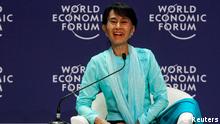
Some people feel Aung San Suu Kyi should speak out more in favor of the Rohingya
Rohingya Muslim men, fleeing from ethnic violence in Myanmar are intercepted by Bangladeshi guards Bangladesh has started turning Rohingya away
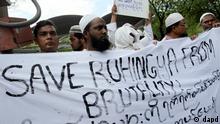
Rohingyas demand an end to the violence
Even as Aung San Suu Kyi is on her tour through Europe, receiving praise for her role in the fight against oppression and violence, a popular Myanmar actress has called out on Facebook to not relent in hatred for Rohingyas.

"I hate them 100 percent," the actress writes.

Hundreds of people belonging to Myanmar's Buddhist majority population have been meeting in the city Yangon over the past few days to vent their racist and sectarian hatred for the Muslim minority.

"Rohingyas out of Myanmar!" they call. Some people refer to them as terrorists, and state media now only speaks of "Bengali Muslims."

The Rohingya are, however, not from Bangladesh, but from Myanmar, the country formerly known as Burma. The ethnic group lives predominantly in the country's west in the Rakhine State. They are not seen as citizens of Myanmar and do not belong to any ethnic minority groups recognized as official by the government.

For decades, they have been subjected to discrimination and violence by Myanmar's Buddhist majority. Two weeks ago, the situation escalated. The unrest continues, even if it seems to have temporarily cooled down. At least 80 people - presumably from both sides - have died and thousands of houses have been burned to the ground.
Ethnic cleansing or slander?
"It is extremely difficult to get credible information out of the region," Ulrich Delius of the rights group Society for Threatened Peoples told DW. He said it was hard to tell the difference between rumors, propaganda and the truth.

"The Rohingyas speak of ethnic cleansing and have even spoken of genocide. The Burmese majority says these accusations are all groundless. They say the Rohingya don't have the right to live in Myanmar. They refer to them as cannibals and say they are subhuman."
Rohingya protesters gather in front of a United Nations regional office in Bangkok, Thailand Monday, June 11, 2012, to call for an end to the ongoing unrestThe comments on the Internet and the demonstrations make obvious that the core of the problem is racism. And the country's process of democratization has played an unfortunate role in it. While it is surely not the origin of the racism, it has created room for the people to act out their aggression, as the "liberalization is setting free new forces," Delius explained.

He sees some similarities to the multi-ethnic Yugoslavia. He says a frequent issue in such countries is "that the people there define themselves through the exclusion of a minority group. That creates unity. Now suddenly, supporters of the democracy movement are standing next to supporters of the military and both are saying, 'we are the real Burmese. What are these idiots after?'"
The government's poor crisis management is making the situation worse, says Delius, who calls it "catastrophic."

"Simply saying, 'we'll impose a state of emergency, we don't want any more reporting on the situation,' is basically a step backwards."
A Southeast Asian crisis
To escape from the violence, people are seeking protection in neighboring Bangladesh. The latter, however, has closed its borders to asylum seekers. Asif Nazrul from the University of Dhaka told DW: "If any of the Rohingyas seeking asylum were involved in terrorism, that would not only have consequences for Bangladesh. If Bangladesh were to let in 10,000 Rohingyas today, tomorrow it could be 10 million."

This statement shows racism from the other side. The Rohingyas cannot simply be placed under a general suspicion of terrorism (although the resistance group Rohingya Solidarity Organisation, RSO, is known to have some contact to radical Islamist groups in Pakistan and Bangladesh). Also, it is not clear whether there are even 10 million Rohingyas in the world who would go to Bangladesh if they could.

The Rohingyas are not welcome on either side. "If we go to Bangladesh, they will kill us," one member of the ethnic community told DW, with his wife adding, "If we go back to Myanmar, they will kill us there."

Myanmar and Bangladesh meanwhile are busy accusing the other of not taking responsibility for the group non grata. But Rohingya don't only live in Myanmar and Bangladesh; they are also in Thailand, Malaysia, India, Pakistan and Indonesia.

"These neighboring countries are becoming increasingly impatient and demand a solution be found in the country they are from," said Delius.

Just recently (on June 21, 2012) Myanmar's government rejected a helping hand from the Malayan government, according to German press agency, dpa.
Aung San Suu KyiIndependent observation in need
There is no obvious solution to the Rohingya plight. Many feel that the country's democracy icon, Aung San Suu Kyi, has not sufficiently spoken out against the racism gripping the west of her country. Observers feel this is because she risks losing support for her democracy movement as prejudice preconceptions can be found throughout the Burmese population.
Amnesty International is demanding that independent monitors be sent in. Only then will the hate-fueling rumors and allegations stop.

Author: Rodion Ebbighausen / sb
Editor: Shamil Shams

Saturday, July 28, 2012


In Pakistan, ‘liberal’ is a dirty word


The lesson to learn from this examination of the word ‘liberal’ and its Pakistani permutations is that Pakistanis are discussing political concepts without knowing what they really mean and conflating them illogically with social, religious, and moral ones.  Instead of being proud of Pakistan’s struggle to espouse liberal values, we’ve turned the word ‘liberal’ into something to be ashamed of, and for a country whose intelligentsia claims to be so politically engaged, this is a disappointing and damaging path to tread.
 
 
(By Bina Shah: The writer is an author, most recently of Slum Child (2010). She has written for numerous publications including Dawn, The Friday Times and Chowk)


Pakistanis have no dearth of curse words to fling at each other at the best of times, but one of the most vitriolic terms in vogue today is the word ‘liberal’. The word is used by itself and in various combinations — liberal fascist, pseudo-liberal — in order to shame and silence an opposing point of view in heated debates about anything from Pakistani society and religion, to the formation of Pakistan and its ideology, to the war on terror. Yet, most people who do so, have no basic understanding of what liberalism really is, and in fact, are confusing it with other concepts in a way that is both ignorant and embarrassing to observe.

First of all, Pakistanis think of a
‘liberal’ as one who drinks, uses drugs, enjoins promiscuity and wears inappropriate clothing. But this is actually a ‘libertine’ — ‘a dissolute person, usually a person who is morally unrestrained’. The most famous libertine in history was probably the Marquis de Sade and while I doubt that anyone in Pakistan could match his debauched lifestyle, anyone who “spurns or ignores accepted morals and forms of behaviour sanctified by larger society” (from Wikipedia) is called a ‘liberal’ incorrectly.

A ‘liberal’ is not the same as a ‘libertarian’, someone who adheres to the political philosophy that individual conscience and individual choice is the highest of all principles. They are individualist, distrust state power, and idealise free market capitalism. This movement believes that all services should be privatised and that taxation is a form of theft. Pakistanis, out of whom
only two per cent pay tax, seem to have perfected this tenet of libertarianism to a fine art, but our sense of individual conscience and choice is woefully underdeveloped by contrast.

So what is a liberal and what is liberalism, really? The dictionary states that liberalism is “a political orientation that favours social progress by reform and by changing laws rather than revolution”. The worldview of liberals is guided by the principles of liberty and equality in society and liberals generally espouse the concepts of constitutionalism, democracy, free and fair elections, equality between men and women, races and religions, human rights, state protection of minorities and the free exercise of religion.

Liberalism, born in the
Age of Enlightenment, has been a powerful force for change in the world; both the American and French Revolutions were inspired by liberal philosophy, monarchies and dictatorships have been overthrown and replaced by democracies, and liberalism has challenged the ideologies of both fascism and communism. More recently, liberalism as a political movement has fired the revolutions of the Arab Spring, but Pakistanis deny and fight the historical impact of liberalism on our own political and historical heritage, when in fact the liberal concept of protecting liberty and individual rights was a major factor in the creation of Pakistan.

Now, the phrase
‘liberal fascist’, as empty as it is oxymoronic, a term that makes absolutely no sense whatsoever, as the principles of liberalism — equality, justice, liberty — are completely at odds with the concept of fascism, which is a form of extremely authoritarian, intolerant right wing governance that takes away the civil rights of its citizens and uses force and violence to compel them into obedience. Perhaps a ‘liberal fascist’ is someone who wants to force their liberal viewpoint on those who disagree with them, but the very essence of liberalism is that it cannot be forced on anyone.

The other phrase, ‘pseudo-liberal’, is slightly less nonsensical than ‘liberal fascist’. In its current usage, Pakistanis use this term to mean a ‘fake’ liberal — someone who claims to be a liberal but in fact believes in and supports a less tolerant political ideology. What they probably really mean is someone who practices what has been termed ‘illiberal liberalism’ or ‘selective liberalism’. This means that a person holds double standards in their liberal worldview; for example, someone will espouse the right of Palestinians to have their own separate state, yet does not support the Kashmiris in the same aspiration.

The lesson to learn from this examination of the word ‘liberal’ and its Pakistani permutations is that Pakistanis are discussing political concepts without knowing what they really mean and conflating them illogically with social, religious, and moral ones.  Instead of being proud of Pakistan’s struggle to espouse liberal values, we’ve turned the word ‘liberal’ into something to be ashamed of, and for a country whose intelligentsia claims to be so politically engaged, this is a disappointing and damaging path to tread.

Friday, July 27, 2012


With royalty and rock, London opens its Olympics


The Olympic rings are assembled above the stadium in a scene depicting the Industrial Revolution during the Opening Ceremony of the 2012 Olympic Summer Games at the Olympic Stadium in London, Friday, July 27, 2012. (Pool,AP Photo/Ezra Shaw)
(CBS/AP) LONDON - Britain opened its Olympics with a royal entrance like no other.
London greeted the world in a celebration of Old England that was stunning, imaginative, whimsical and dramatic - and cheeky, even featuring a stand-in for Queen Elizabeth II parachuting with James Bond into Olympic Stadium.
Moments later, the 86-year-old monarch herself stood solemnly while a children's choir serenaded her with "God Save the Queen," and members of the Royal Navy, Army and Royal Air Force raised the Union Jack.
Much of the opening ceremony was an encyclopedic review of British music history, from a 1918 Broadway standard adopted by the West Ham football team to The Who's "My Generation" to "Bohemian Rhapsody," by still another Queen.
The evening started with fighter jets streaming red, white and blue smoke and roaring over the stadium, packed with a buzzing crowd of 60,000 people, at 8:12 p.m. - or 20:12 in the 24-hour time observed by Britons.
An explosion of fireworks against the London skyline and Paul McCartney leading a singalong were to wrap up the three-hour opening ceremony masterminded by one of Britain's most successful filmmakers, Oscar winner Danny Boyle.
The director of "Slumdog Millionaire" and "Trainspotting" had a ball with his favored medium, mixing filmed passages with live action in the stadium to hypnotic effect, with 15,000 volunteers taking part in the $42 million show.


Olympics 2012 Opening Ceremony time, schedule: London welcomes world tonight with massive event
One of the biggest secrets in London will finally be revealed today Friday: what will happen at the opening ceremony for the Summer Olympic Games.
Friday night perhaps a billion people will finally get to see the extravaganza created by Danny Boyle, best known for the Oscar-winning film "Slumdog Millionare."
The day got off to a resounding start as bells around the country, including London's famous Big Ben, pealed for three minutes.
The Olympic torch, which has traveled around the United Kingdom over the past 70 days, then set off on the final leg of its journey toward the stadium, aboard the royal barge Gloriana.

Wednesday, July 25, 2012


Sumera Khan / Peer Muhammad

Pakistan’s government has launched a counter-offensive against a British tabloid that ‘uncovered’ the ‘London Olympics visa scam’ after investigations into the issue apparently showed that the story was fictitious

UK tabloid sets off another sporting controversy

Published: July 24, 2012
The Sun's investigator told he could be smuggled into London games as part of Pakistan’s Olympic squad for £7,000.
LONDON:  Another potentially-crippling scandal hit Pakistani sports on Monday – and once again it was broken in dramatic style by a UK-based tabloid newspaper.
The Sun claims to have unearthed a scam, involving a “Lahore-based politician” and other officials, wherein Pakistani nationals were brought into England under the garb of participants and officials accompanying the Pakistani Olympics delegation for the summer 2012 games – set to start on Friday.
However, Pakistan’s Olympic chef de mission Aqil Shah dismissed The Sun’s claims.
According to an exclusive report of a sting operation published in The Sun, a journalist allegedly broke into “a crime ring offering false passports, visas — and access to London 2012 as bogus support staff.” The report upped the ante on the already-startling charges by saying the ring brought in “potential terrorists.”
The Sun alleges that Lahore-based politician Abid Chaudhry offered its undercover reporter in Pakistan the chance to go to the Olympics posing as an official member of the Pakistani contingent on a two-month visa in return for a million rupees ($10,000). The crime ring had been under investigation after the daily informed UK intelligence, MI6, the Home Office, the UK Border Agency and the British High Commission in Islamabad.
 
Pakistani sports officials rubbished claims by a British newspaper to have uncovered a visa scam that could have allowed potential terrorists into the Olympic Village.
 
Pakistani sports officials rubbished claims by a British newspaper to have uncovered a visa scam that could have allowed potential terrorists into the Olympic Village.

Pakistan’s government has launched a counter-offensive against a British tabloid that ‘uncovered’ the ‘London Olympics visa scam’ after investigations into the issue apparently showed that the story was fictitious.
Terming the story “propaganda,” the federal cabinet decided on Wednesday to file a lawsuit against the daily paper, The Sun, in British courts. A meeting, presided over by Prime Minister Raja Pervaiz Ashraf, approved the decision to sue the newspaper for publishing the report based on assumptions, said a source, adding that Pakistan will seek Rs10 billion in damages.

Monday, July 23, 2012


Twitter alert: Sana Bucha resigns?

Published: July 1, 2012
Bucha resigns, allegedly in protest of Geo’s rehiring of Dr Aamir Liaquat. PHOTO: TWITTER
Twitter was abuzz on Sunday due to rumors of major shifts in the media world – the alleged resignation of Pakistani TV anchor and columnist Nasim Zehra from Dunya TV, and the resignation of TV anchor Sana Bucha from Geo.
While Bucha’s resignation dominated trends in Pakistan for her resignation and refusal to do her show, purportedly in protest of Geo’s rehiring of Dr Aamir Liaquat (read: Delusion, denial and ‘Dr’ Liaquat), Zehra’s resignation rumor focused on her exit as a protest against the recently staged show featuring Malik Riaz, Mubasher Lucman and Mehar Bukhari. TV anchor Maria Memon tweeted that she filled in for Sana Bucha on June 30, adding weight to the rumour.
While many took the time to laud Bucha for a principled stand, many others questioned whether both resignations were just temporary stunts.
Top Tweets
If sana bucha has truly resigned because of aamir liaqat’s rehiring, big move from the lady in an atmosphere of gutter tv. Well done.
Sana Bucha resigned. That too because of Aamir Liaquat. Something just isn’t right about this.
Sana Bucha’s resignation is a novel act. Standing up against hypocrisy & bigotry are indeed, acts of bravery. Well done #Geo #Bucha
Mubashir Lucman has joined ARY, Aamir Liaquat is rejoining GEO, SanaBucha has resigned from GEO
Sana Bucha has resigned in protest for rehiring of online Amir Liaquat by Geo. She should be appreciated! (sic)
It is indeed a principled stand by @sanabucha but as @abbasnasir59rightly said people will continue 2 watch GEO & there needs 2 b 1 sane voice
The fact that people are applauding Sana Bucha for resigning because of Amir Liaqat is so funny. I’m sorry but I don’t believe a word of it.
Heard about Sana Bucha resigning because of Aamir Liaqat’s rehiring. Lady’s got guts. And nice hair.
Nasim zehra resigns cause of dunya staging show. Now sana bucharesigns cuz of aamir liaqat?! Puleeze..gimme a break. Its just grandstanding
I am so glad that sana Bucha is trending instead of Amir gives me hope (false) hi sahi
Nasim Zahra and Sana Bucha both resigned B’coz of an understanding. Yes you got it right, they’re Switching. NZ to Geo and SB to dunya.
Everyone, and I’m sure Sana Bucha included knew what Amir Liaqat was all about before the hilarious leaked video came out. #KaesaDiya
@Fareshte@sanabucha trending now” the right path is always the most fulfilling no matter how hard.
If Sana Bucha has resigned what are the odds she takes it back before the week is over?